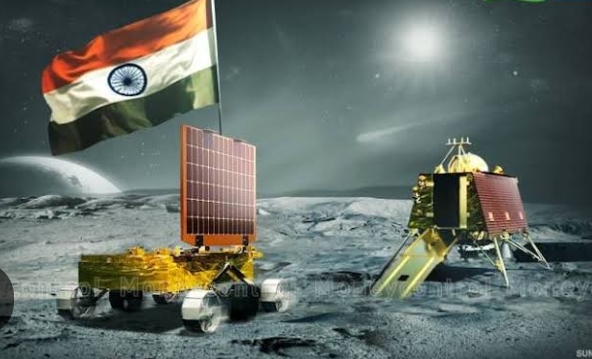
In a historic endeavor, India has embarked on its third lunar mission, aptly named Chandran-3, reaffirming the nation’s commitment to space exploration. Building upon the successes of Chandrayaan-1 and Chandrayaan-2, this mission holds great promise for scientific discovery and technological advancements, while also bolstering India’s position on the global space stage.
★The Chandran-3 Mission: Unveiling the Objectives
Chandran-3, the third lunar exploration mission by the Indian Space Research Organisation (ISRO), aims to achieve a comprehensive understanding of Earth’s nearest celestial neighbour, the Moon. The mission is poised to achieve the following key objectives:
1. Lunar Surface Analysis
Chandran-3 will conduct in-depth analysis of the lunar surface, providing valuable insights into its geological composition, topography, and mineral resources. This data is vital for scientific research and potential future lunar mining endeavours.
2. Water Detection:
One of the mission’s primary objectives is to identify and map the presence of water molecules on the lunar surface. This is crucial for planning future human missions to the Moon, as water can be converted into oxygen and hydrogen for life support and rocket fuel.
3. Exploration of the South Polar Region:
Chandran-3 will focus on the largely unexplored south polar region of the Moon, known for its unique geological features, including permanently shadowed craters where water ice may be preserved.
4. Technology Demonstration: The mission will showcase India’s technological prowess by testing new landing and rover capabilities. It will also deploy advanced scientific instruments to gather data on the Moon’s exosphere and other lunar phenomena.
Benefits to India: A Multifaceted Impact
The Chandran-3 mission carries a host of benefits for India, spanning scientific, technological, and strategic domains:
1. Scientific Advancements: Chandran-3’s findings will contribute significantly to our understanding of the Moon’s geological history and evolution. This knowledge can provide insights into the Earth-Moon system’s formation and help address questions about our planet’s early history.
2. Technological Innovation: The mission fosters innovation in spacecraft design, landing technology, and rover development. These advancements have broader applications, including improving India’s satellite technology and positioning it as a competitive player in the global space industry.
3. Strategic Influence: Successful lunar missions enhance India’s international prestige and strengthen its position in space diplomacy. Collaboration opportunities with other spacefaring nations and organizations may arise, bolstering India’s influence on the global space stage.
4. Economic Opportunities: The data gathered during Chandran-3 can be leveraged for future lunar resource exploration, potentially opening doors to commercial ventures and economic growth.
Conclusion: A Bright Future for Indian Space Exploration
The Chandran-3 mission represents a significant milestone in India’s space exploration journey. Beyond the immediate scientific goals, it symbolizes India’s commitment to pushing the boundaries of space technology and international collaboration. As Chandran-3 embarks on its lunar expedition, the nation eagerly awaits the wealth of knowledge and innovation it will bring back, further propelling India into the forefront of space exploration.

 IndoTechs
Leave a reply to Ali Cancel reply